Manchester · Nationwide installation
Our artificial grass installation process
A good finish starts with the work beneath the grass. Here is how we approach a garden installation, from assessing access to the final brushing.
The preparation is tailored to the existing surface, ground conditions and use of the space. The examples on this page are from our own projects.
STEP 1
Assess the garden and access
We start with photographs, measurements and your postcode so we can understand the area and discuss a quote. Tell us what is currently on the ground and how the garden is reached. Steps, narrow routes and access through the house all affect how the work is planned. We discuss the intended use—pets, family space, football practice or putting—and the preparation your garden needs.
STEP 2
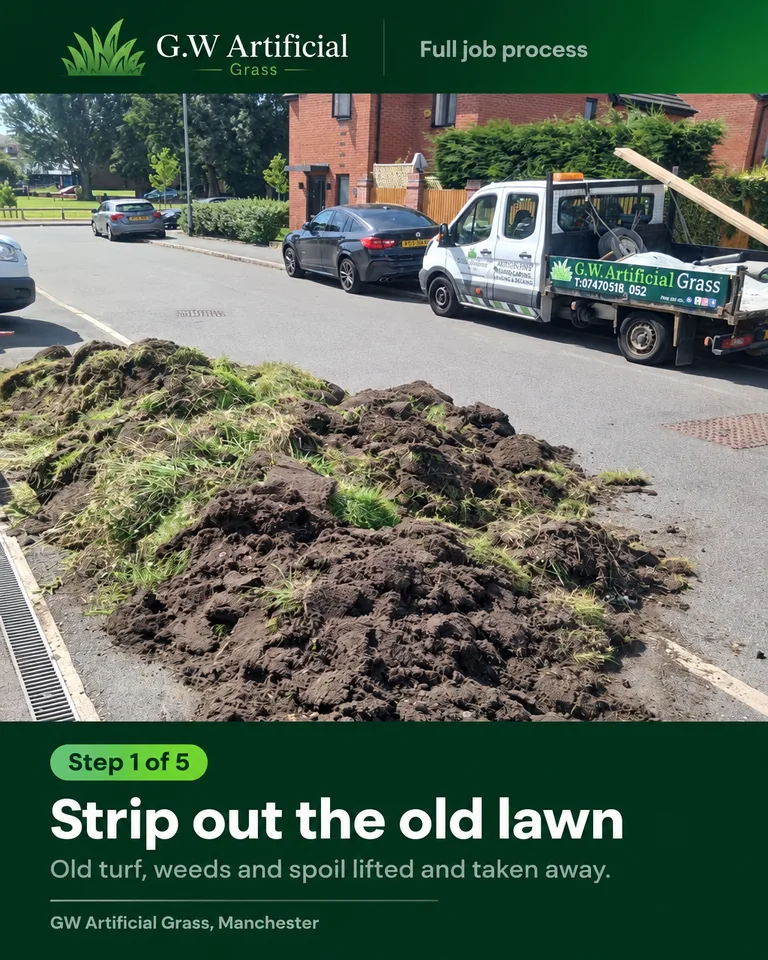
Remove the old grass and prepare the area
For an installation replacing a natural lawn, the old grass is removed and the area is excavated to make room for the prepared base. The depth and amount of material depend on the existing ground and finished levels. Our Newton Heath project involved a hand dig before the new base was installed.
STEP 3
Lay the weed membrane
A weed membrane is laid as part of the ground preparation. Our Chester putting green project used a layer of membrane after the old grass was removed. Membrane helps manage weed growth from below, but leaves and airborne seeds still need to be cleared from the finished surface.
STEP 4
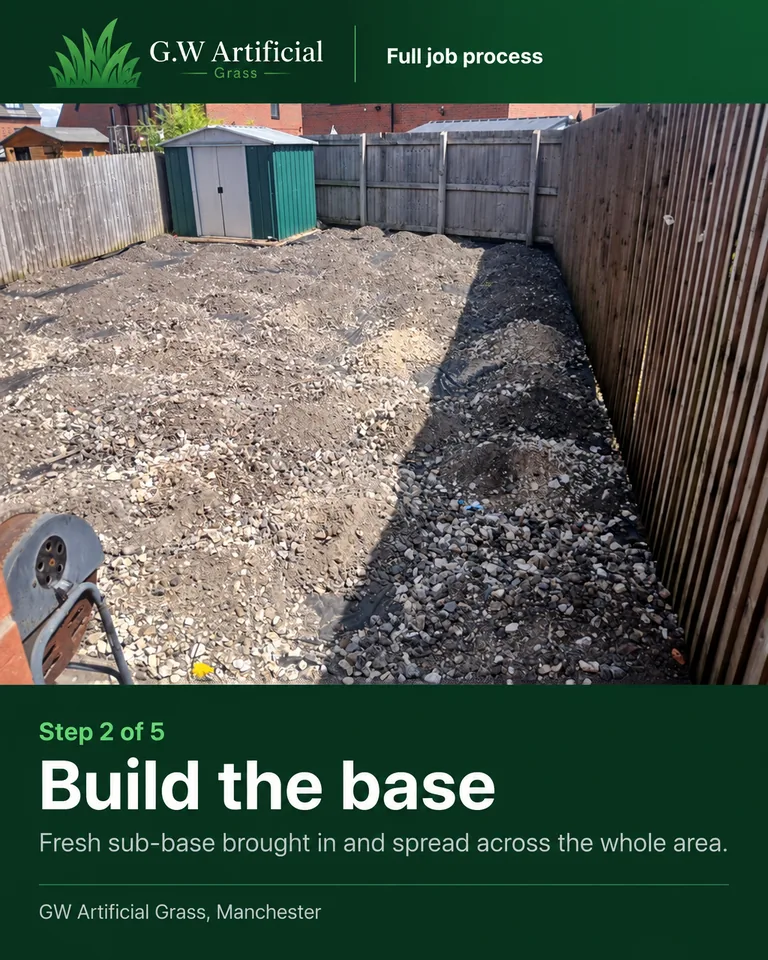
Build and compact the MOT stone base
The MOT stone forms the foundation beneath the lawn. It is spread and compacted to create a stable base, with the levels and drainage considered as part of the preparation. The amount is specific to the job: Chester used a 75mm layer, while our 90 m² Newton Heath installation used 9 tonnes. Those figures are project examples rather than a specification for every garden.
STEP 5
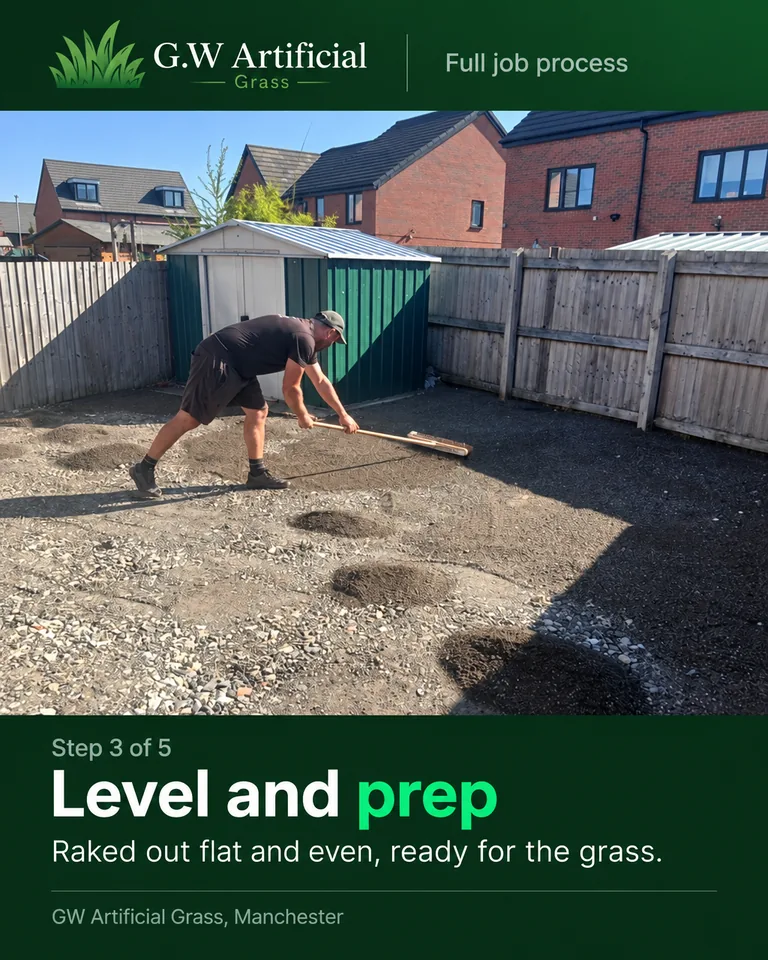
Prepare the grit sand finishing layer
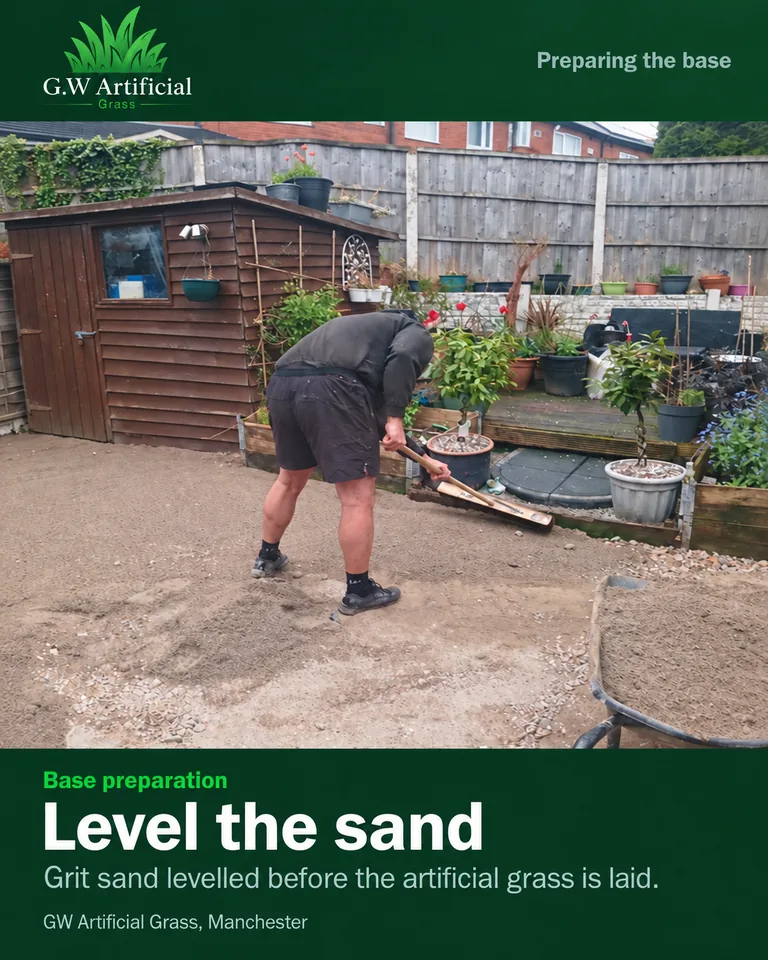
Grit sand is used above the stone to prepare the surface for the grass. Careful levelling and preparation help avoid an uneven finish. Chester used a 25mm grit sand layer; Newton Heath used 3 tonnes. The thickness and quantity are planned around the particular installation.
STEP 6
Lay, position and cut the grass
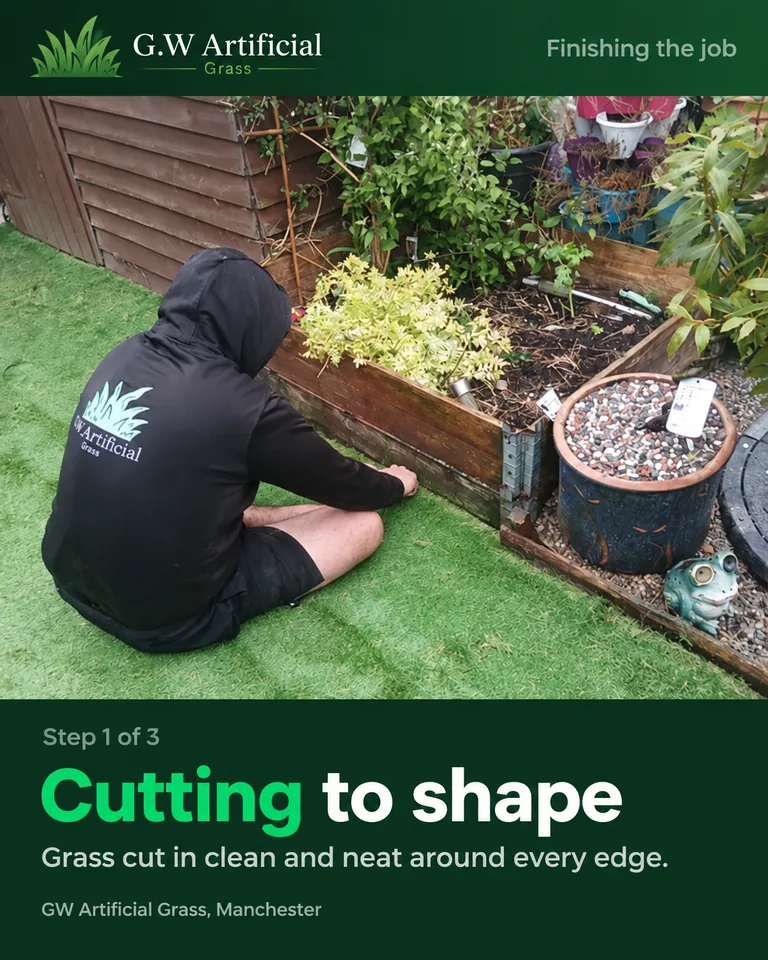
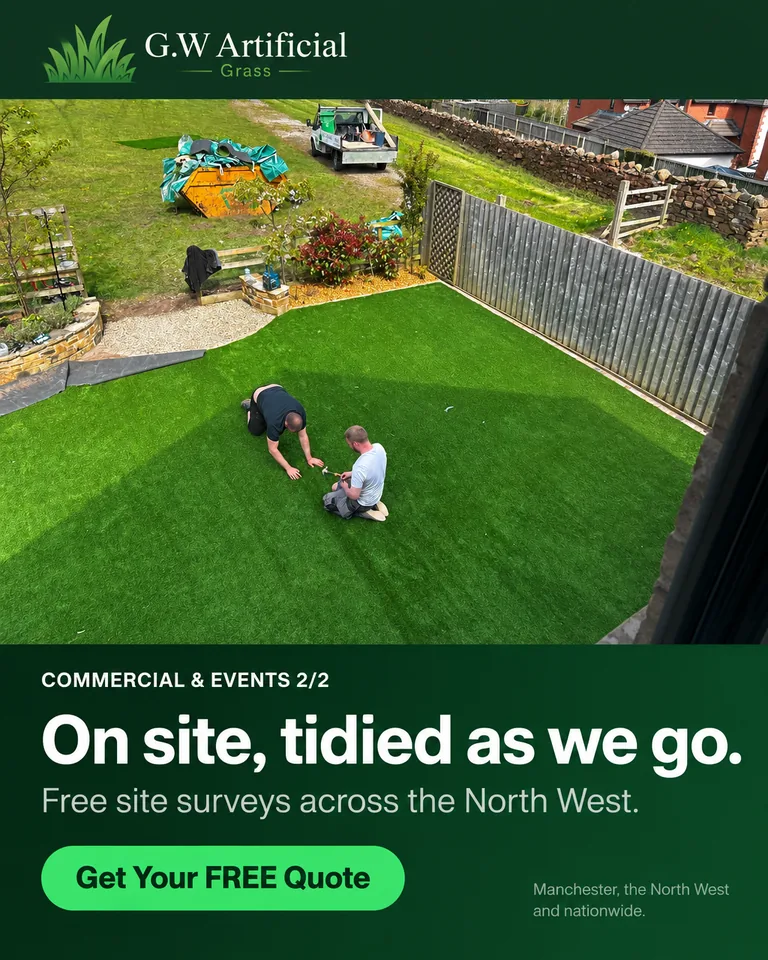
The grass is laid out, positioned and cut to fit the area. Where more than one piece is needed, the pile direction is aligned for a consistent appearance. Product choice depends on the purpose: Chester used 16mm Pro putting green turf with a 40mm surround, while Newton Heath used 40mm child- and pet-friendly Supreme grass.
STEP 7
Join and secure the grass
Where grass sections meet, the joints are secured using joining tape and artificial grass glue. On suitable ground installations, the grass is secured with 6-inch galvanised nails around the perimeter. Installing over existing paving uses a different fixing method, explained below.
STEP 8
Brush, check and explain aftercare
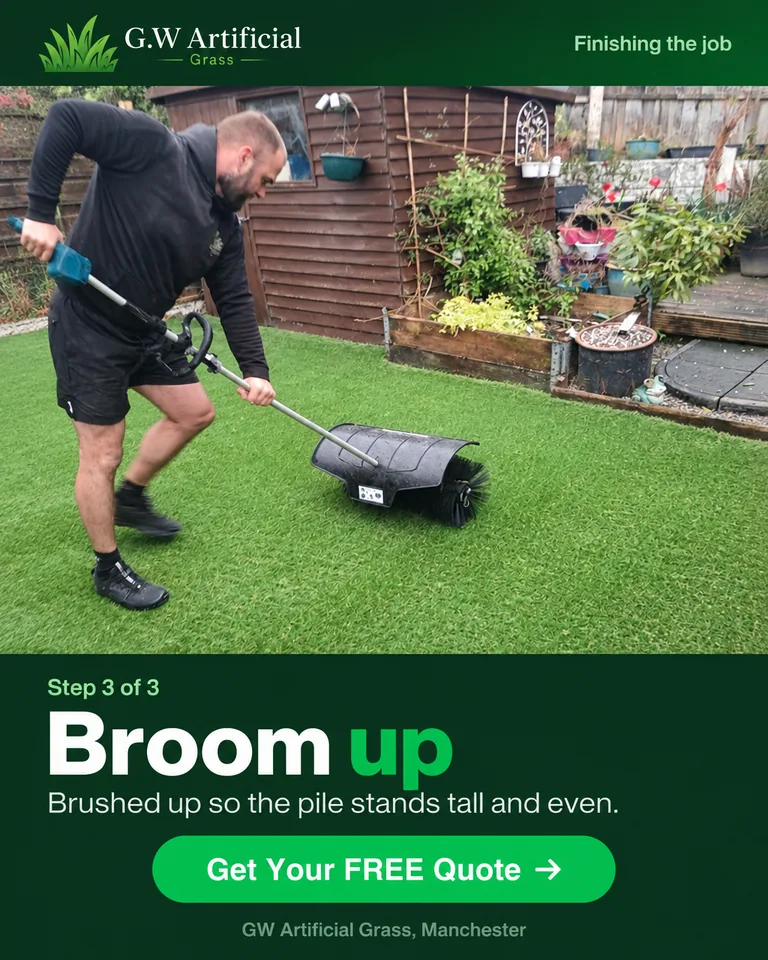
The finished lawn is brushed, the installation is checked and the work area is tidied. Artificial grass needs less routine care than a natural lawn, but still benefits from brushing, removal of leaves and debris, and cleaning—especially where pets use the garden. We explain how to look after your finished surface.
A different approach: artificial grass over existing flags
Where existing paving is suitable, keeping it can avoid the cost of excavation and a replacement base. In our Bury project, we removed the weeds and secured the grass onto the existing flags using waterproof artificial grass glue. The paving condition, levels and drainage need to be assessed before deciding whether this approach suits another garden.
See the Bury patio transformationQuestions about the work
Can you install grass with difficult access?
Our Warrington project involved access up steps, and in Oldham wheelbarrows were taken through the house. Send photos of your access route so we can assess arrangements for your property.
Does every garden need the same base depth?
No. The preparation depends on the existing ground, levels, drainage and proposed use. Chester’s 75mm MOT stone and 25mm grit sand layers describe that particular project.
How long does an installation take?
Timing depends on the size, access and preparation. Our 90 m² Newton Heath installation was completed in two days. We discuss the likely schedule for your own project when quoting.
Is artificial grass maintenance-free?
It is low maintenance, but still needs debris removal, brushing and cleaning. Pet areas need particular attention to hygiene.
Get a free installation quote

Send your garden photos, measurements, postcode and photos of the access route. Tell us what is currently on the ground and how you want to use the space.
WhatsApp for your FREE quotePet-friendly artificial grass · Putting greens · Commercial and bar areas · Nationwide installation · Credit card payments accepted
Our warranties
10-year warranty on the artificial grass.
3-year warranty on groundworks carried out by G.W Artificial Grass LTD.
Ask us for the warranty terms and what is covered with your installation quote.
Fully insured with public liability insurance.
G.W Artificial Grass LTDBad Access • Two Flights of Steps 🚧
A challenging access installation completed through the property and up steep steps.